I was at a Taiwan Oolong tasting last week. The host was very kind and showed us quite a few Oolong from Taiwan. “Four Season”, “Jin Xuan”, “Alishan”, she called out the tea names while pour the teas. Not before long, I could tell people started to get confused. “What was the one we just tasted again?” So how many names/types Taiwan Oolong has?
People familiar with Taiwan Oolong are familiar with names such as Bao Zhong (Pou Chong) and Dong Ding/High Mountain. Those are names based on different levels of fermentation. Bao Zhong is 7.5% to 19% fermented, the lightest among all Taiwan Oolong. Dong Ding/High Mountain is 20% to 30% fermented. Oriental Beauty is 50% to 60% fermented, the heaviest among all Taiwan Oolong.
Names such as Four Season and Jin Xuan, on the other hand, are based on different varietals. Qing Xin Oolong was originally imported from mainland China. It is a good raw material for making Bao Zhong and Dong Ding. Jin Xuan (also known as Tai Cha #12) and Cui Yu (also known as Tai Cha #13) are new varietals developed in Taiwan in the 80s. Four Season got its name because it can be harvested in all seasons.
DaYuLing, Li Shan, Shan Lin Xi, and Alishan are four high mountain tea production regions in Taiwan. DaYuLing, located 2,300 to 2,600 meter above sea level, it is the highest among the four. Followed by Li Shan, which is 2,200 to 2,400 meter above sea level. Shan Lin Xi is at 1,100 to 1,800 meter above sea level, and Alishan is at over 1,000 meter above sea level. High mountain Oolong from DaYuLing is considered the best.
What are you drinking now?
Linda
www.teahub.com
Showing posts with label Oolong. Show all posts
Showing posts with label Oolong. Show all posts
Wednesday, July 08, 2009


Saturday, June 13, 2009
Oriental Beuaty Production May Be Impacted By Weather
Recent news from XinZhu, the production region of Oriental Beauty, a highly fermented Oolong from Taiwan, suggested possible decrease in this year’s production. High temperature and lack of rain are all contributing factors to this year’s low production.
Oriental Beauty, also called Bai Hao Oolong or Champagne Oolong, is made of young leaves and buds that just been bitten by tea insects. Oriental Beauty is much more close to black tea than other Oolong teas.
Tea Lovers at TeaHub
www.teahub.com
Oriental Beauty, also called Bai Hao Oolong or Champagne Oolong, is made of young leaves and buds that just been bitten by tea insects. Oriental Beauty is much more close to black tea than other Oolong teas.
Tea Lovers at TeaHub
www.teahub.com
Sunday, June 07, 2009
Making Tie Guan Yin Cold Brewed Iced Tea
Another hot day today! I decided to make some iced tea for the hot day. I was in a mood for Tie Guan Yin and wanted something very simple. 5 minutes + 3 hr wait later, I am drinking my cold brewed Tie Guan Yin iced tea.
Here is how I did it:
Step 1: I measured 4g Moderately Roasted Tie Guan Yin and added it to an empty water bottle.
Step 2: I poured in 1L bottled water, and let the water bottle cooled off in refrigerator for 3 hours
Step 3: Time to enjoy! If you are like me, you can drink with the tea leaves in. Otherwise, drain the leaves before drinking it.
Linda
www.teahub.com
Monday, June 23, 2008
2008 Spring WuYi Rock Tea Expected to Hit Market in July
This year's spring WuYi Rock Tea starts to show up on market in the recent few days. Industry insiders are expecting all types of WuYi Rock Tea to hit market in July. Recent words from our Da Hong Pao producer were that their Da Hong Pao wouldn't be available till late June, early July. Due to large demand, overall price of this year's WuYi Rock Tea will raise 20% to 30%.
Linda
www.teahub.com
Linda
www.teahub.com
Sunday, June 08, 2008
A Comparison of Xi Ping, Gan De, and Xiang Hua Tie Guan Yin
Inner AnXi is famous for its Tie Guan Yin tea. Xi Ping, Gan De and Xiang Hua are the three most well known tea production areas in Inner AnXi. Tie Guan Yin from the three areas have different charateristics.
Xi Ping is the origin of Tie Guan Yin. Xi Ping Tie Guan Yin is famous for its excellent taste. Its aroma is relatively light. Xiang Hua is the major Tie Guan Yin production area. Xiang Hua Tie Guan Yin is famous for its high aroma and good taste. Mainly younger bushes, Gan De Tie Guan Yin has high aroma but light taste. Gan De is famous for its lightly roasted Tie Guan Yin.
By carefully blending Mao Cha (raw tea) from different areas, tea producters can now offer Tie Guan Yin of good taste and aroma.
Linda
www.teahub.com
Thursday, May 11, 2006
Da Hong Pao
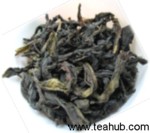
As the most famous one of all WuYi Rock Teas, Da Hong Pao is a no stranger to Oolong lovers. Many people have heard of the fantasy of the original Da Hong Pao tea trees growing on the Jiu Long (Nine Dragon) Cave. However, barely anybody have the opportunity to taste Da Hong Pao made of leaves from the original Da Hong Pao trees. So what are those available on the market now?
Mr. Chen Dehua is a name that associates with Da Hong Pao teas available on today’s market. Mr. Chen successfully cultivated modern Da Hong Pao trees from five cuttings from the original Da Hong Pao trees in 80s. He then went ahead test produced Da Hong Pao tea using leaves from cultivated Da Hong Pao trees. When he gave his new tea to famous tea expert, Mr. Zhang Tianfu, to taste, Mr. Zhang thought highly of this new product. WuYi Mountain Tea Research Institute hence produced their first Da Hong Pao tea under the supervision of Mr. Chen, who was head of the institute at that time.
Sales went through the roof and productions of those newly cultivated modern Da Hong Pao trees could not meet high demands for Da Hong Pao tea. Mr. Chen boldly drummed up another idea - why not create a Da Hong Pao alike tea by mixing up Da Hong Pao, and other WuYi Rock teas, such as Rou Gui, Shui Xian, etc.? - That becomes what is widely available as Da Hong Pao now.
Linda
www.teahub.com
Thursday, November 03, 2005
Autumn Oolong
Leaves are changing colors and Autumn Oolongs are coming out. Fall is an exciting season for Oolong lovers. Autumn Oolongs are known for their pleasant high aromas. Weather conditions in fall are especially good for the formation and accumulation of those aroma particles. On the other hand, leaves of Autumn Oolongs lack the particles, such as amino acid, that contribute to the pleasant, while sophiscated, long lasting tastes of Spring Oolongs.
Generally speaking, Spring Oolongs are considered the best followed by Autumn Oolongs. If the high aromas of Autumn Oolongs are what you are seeking for, it is the season for a wonderful cup of Autumn Oolong.
Linda
www.teahub.com
Generally speaking, Spring Oolongs are considered the best followed by Autumn Oolongs. If the high aromas of Autumn Oolongs are what you are seeking for, it is the season for a wonderful cup of Autumn Oolong.
Linda
www.teahub.com
Subscribe to:
Posts (Atom)