We have received several emails from customers were confused by the grading systems different sites use for their West Lake Long Jing. In stead of answering those emails individually, we feel it is better that we address it to all of our customers via our blog.
City of Hangzhou published Long Jing Local Standard in 2005. According to this standard, West Lake Long Jing can be classified into seven grades: Jing Pin(精品), Te Ji (特级), and Grade 1 to 5, with Jing Pin being the highest grade and 5 being the lowest grade.
Both Jing Pin and Te Ji West Lake Long Jing are certified by Hang Zhou Quality Control Center and packed under controlled environment with special anti-fake label and certificate, which allow customers to check authenticity online or by phone. The anti-fake number is 17 digits long and the certificate number is 8 digits long. Only 1,750kg Jing Pin and 2,800kg Te Ji West Lake Long Jing were produced in 2007. The this year's first 600kg Jing Pin West Lake Long Jing went on market on April 7.
While Te Ji West Lake Long Jing is consist of 70% one bud and one leave tea leaves and 30% one bud and two leaves tea leaves, that ratio is reversed in Grade 1 West Lake Long Jing. Therefore, if the West Lake Long Jing you bought is mainly consists of one bud and two leaves, it is not a Te Ji no matter how your vendor rates it.
Video: How Long Jing is Made
Linda
www.teahub.com
Sunday, April 20, 2008


Tuesday, April 15, 2008
Tie Guan Yin expected to be available after May 1st
We received many inquires about this year's Oolong. Unlike green teas which value early spring young leaves and buds, Oolong teas require maturer leaves that can stand the partial fermentation process.
Although AnXi Oolong started harvest this week, those harvest now are Huang Jin Gui, an Oolong famous for its high aroma. Tie Guan Yin lovers will have to wait till May for this year's Spring Tie Guan Yin. AnXi Tie Guan Yin will start harvest on April 28 and mass production will start between May 2 to 7.
Linda
www.teahub.com
Although AnXi Oolong started harvest this week, those harvest now are Huang Jin Gui, an Oolong famous for its high aroma. Tie Guan Yin lovers will have to wait till May for this year's Spring Tie Guan Yin. AnXi Tie Guan Yin will start harvest on April 28 and mass production will start between May 2 to 7.
Linda
www.teahub.com
Wednesday, March 26, 2008
West Lake Long Jing Expected to Hit Market on April 1st
Although some early harvest started to hit market in recent few days, large production will have to wait till April 1. As expected, quality of this year's production is the best among past few years. Shortened pre-Ming harvest period caused shortage in quantity, and that in turn, drove up this year's price by 10% to 20%.
Linda
www.teahub.com
Linda
www.teahub.com
Monday, March 24, 2008
Bi Luo Chun Will Hit Market Soon
According to recent news from Su Zhou, this year's Dong Shan Bi Luo Chun harvest started on March 21. Large productions will start to hit the market by March 25. Experts are expecting 10% to 15% price hike this year. Price for top grade Bi Luo Chun will be RMB¥5,000 (prox. USD$715) per 500g.
Linda
http://www.teahub.com/
Linda
http://www.teahub.com/
Tuesday, March 11, 2008
Cold Early Spring Weather Will Likely Reduce Production of Premium Bi Luo Chun
Recent news from JiangSu reported that local producers were expecting reduced production of premium Bi Luo Chun due to this early spring's cold weather. Cold weather will likely delay harvest of this year's Bi Luo Chun by 10 days and this in turn will shorten the production period of premium Bi Luo Chun. Overall production of this year's Bi Luo Chun are expected to be similar to that of last year.
Linda
www.teahub.com
Linda
www.teahub.com
Saturday, February 23, 2008
Famous Zi Sha Master, Rong Jiang, Passed Away
Ms. Rong Jiang, famous zi sha craftswoman, passed away on Jan. 19, '08 at age of 90. Ms. Jiang was born to a zi sha craftman's family in YiXing, and began to learn to make zi sha ware at age of 11. She designed more than 200 zi sha wares in her life time. Some of the well known ones are: Lotus Flower Teapot, Water Chestnut Teapot, and Lotus Wine Set. Here are some pictures of Ms. Jiang's work.
Linda
http://www.teahub.com/
Linda
http://www.teahub.com/
Cold Weather Will Likely Delay Harvest of This Year's Ming Qian Long Jing
Recent extremely cold weather in many southern parts of China raised concerns over this year's tea productions. Several news reports from Xi Hu (West Lake), the original production region of West Lake Long Jing, suggest that this year's Ming Qian Long Jing will likely start to be available around March 25. Mass production, however, will have to wait till late April. On the positive side, the cold weather killed pests and slowed growth of new leaves, which in turn improved quality of this year's production.
Linda
http://www.teahub.com/
Linda
http://www.teahub.com/
Monday, June 25, 2007
Ri Zhao Green Tea, a gem from northern China
Grown up in northern China, Ri Zhao tea trees have longer winter time than their southern siblings. Significant day-night temperature difference is good for accumulation of many critical contents. Analyses show that Ri Zhao tea has higher catechin (13.7% higher) and amino acid (5.3% higher) than similar products from southern China. Ri Zhao’s unique climate and geographic condition give its green tea clear yellow-green liquor, strong chestnut aroma, mellow sweet after taste, long lasting infusions, and rich contents of vitamins, minerals and trace minerals (selenium >=25mg/kg).
After some extensive search, we are now able to offer the best of Ri Zhao Green Tea to our customers.
Linda
www.teahub.com
After some extensive search, we are now able to offer the best of Ri Zhao Green Tea to our customers.
Linda
www.teahub.com
Tuesday, June 19, 2007
CCTV2 – Pu-erh Bubble Burst
After reaching its peak in April, Pu-erh price fell sharply in May. CCTV recently featured a 30 minute program on the Pu-erh bubble and its burst. It documented the sharp rise and fall of Pu-erh price since last year. In large markets like Guangdong, Beijing, and Shanghai, Pu-erh price dropped as much as 40%.
Thinking back, I still could not believe what happened this spring. Heated market kept pushing raw material prices to new highs. As the CCTV program stated, local farmers raised their price expectations in the wake of this extreme Pu-erh heat. Concerns over this year’s new production prices prompted people into collecting past years’ productions. It was quite common to see that the same Pu-erh demanded twice of March’s price in April. Now, less than two months later, it is like game over…
I am happy to see the bubble burst. My affection for Pu-erh remains the same. Pu-erh is still the same Pu-erh. Let’s weed out those commercial plays, and enjoy and appreciate a good cup of Pu-erh.
Linda
www.teahub.com
Thinking back, I still could not believe what happened this spring. Heated market kept pushing raw material prices to new highs. As the CCTV program stated, local farmers raised their price expectations in the wake of this extreme Pu-erh heat. Concerns over this year’s new production prices prompted people into collecting past years’ productions. It was quite common to see that the same Pu-erh demanded twice of March’s price in April. Now, less than two months later, it is like game over…
I am happy to see the bubble burst. My affection for Pu-erh remains the same. Pu-erh is still the same Pu-erh. Let’s weed out those commercial plays, and enjoy and appreciate a good cup of Pu-erh.
Linda
www.teahub.com
Wednesday, April 11, 2007
Palace Museum Tribute Pu-erh is back to its hometown and Pu-erh Price keeps rising
The famous Palace Museum Golden Melon Tribute Pu-erh ended its 20 day journey and arrived at Pu-erh County on April 6. Along with arrival of the century old Pu-erh, here comes another heat wave of Pu-erh. This year’s mao cha prices have raised to 3 to 5 times of last year’s prices.
Although local tea farmers are enjoying another prosperous year, the skyrocketing costs and concerns over overheating have kept some Pu-erh producers and vendors staying on sidelines this year. How high can Pu-erh prices go? Some people have started to propose a Pu-erh future market. Humm… a Pu-erh future market, how do you like this idea?
Linda
www.teahub.com
Although local tea farmers are enjoying another prosperous year, the skyrocketing costs and concerns over overheating have kept some Pu-erh producers and vendors staying on sidelines this year. How high can Pu-erh prices go? Some people have started to propose a Pu-erh future market. Humm… a Pu-erh future market, how do you like this idea?
Linda
www.teahub.com
Tuesday, April 10, 2007
Ming Qian and Yu Qian Tea
Ming Qian (Pre-Ming) tea means teas plucked before Qing Ming. This year's Qing Ming is April 5, which means teas plucked after that can't be called Ming Qian tea. Yu Qian tea means teas plucked between Qing Ming and Gu Yu. This year's Gu Yu is April 20.
Green tea prices are generally very sensitive to these two days. Ming Qian tea normally demands hefty premiums. Yu Qian teas sometimes can be good bargains. After Gu Yu, it normally is game over for green tea producers with the exception of some northern region green teas, which harvest late due to cold weather. Although some companies produce teas all year long, quality of later harvest is nowhere close to that of spring harvest.
Linda
http://www.teahub.com/
Green tea prices are generally very sensitive to these two days. Ming Qian tea normally demands hefty premiums. Yu Qian teas sometimes can be good bargains. After Gu Yu, it normally is game over for green tea producers with the exception of some northern region green teas, which harvest late due to cold weather. Although some companies produce teas all year long, quality of later harvest is nowhere close to that of spring harvest.
Linda
http://www.teahub.com/
Wednesday, March 14, 2007
Si Mao City Will Change Name to Pu-erh City
The Pu-erh rush is getting even hotter. Recent news reported that Si Mao City, which enjoyed RMB 80 million sales from Pu-erh trade in 2006, will change name to Pu-erh City. The new name will take effect on April 8, 2007.
Si Mao City is happily riding the Pu-erh heat wave in recent years. Half of the city’s populations are working in Pu-erh industry. The city have many future investment projects aiming at boosting Pu-erh and related industries, which the city hope to ring in RMB 5 billion in combined sales by year 2010.
Linda
http://www.teahub.com/
Tags: Pu-erh, Si Mao
Si Mao City is happily riding the Pu-erh heat wave in recent years. Half of the city’s populations are working in Pu-erh industry. The city have many future investment projects aiming at boosting Pu-erh and related industries, which the city hope to ring in RMB 5 billion in combined sales by year 2010.
Linda
http://www.teahub.com/
Tags: Pu-erh, Si Mao
Friday, March 02, 2007
Venture Capital Eyes Pu-erh
If you are wondering where the Pu-erh heat is heading, up is the only direction. The RMB 55 million investments from two venture capital companies to a Pu-eh factory caused quite a stir in Pu-erh industry in
Linda
Tags: Pu-erh, Investment, Venture Capital
Wednesday, December 06, 2006
YIBEIDING (宜北町) Black Tea House
 Google 宜北町(YIBEIDING), I got over thousand hits. Quickly read through the first 20 or so search results, it is clear to me that YIBEIDING has successfully embedded in local people’s life. People blog about their life, their memories at YIBEIDING.
Walking into any YIBEIDING branch, you will be very impressed by its tasteful interior design - welcoming with a sense of harmony. No wonder some customers visit there every day! Either you want a quite corner for a good hour long reading or a cozy place for group gathering, YIBEIDING has all to offer.
Although its top-notch store design creates natural attraction, what really set YIBEIDING aside from all competitors are its unique products, specially flavored house black tea drinks, and high quality service. “We only use top quality products. From ingredients to even tea cups, you can expect the best at YIBEIDING. That is our promise to our customers.” said Wang, CEO
“Let’s meet at YIBEIDING.
We are passionate about every cup of tea we made.
Welcome to YIBEIDING.
Cool Drink or hot treat,
Strong taste or light flavor,
Our colorful selections will always satisfy you the most.”
Linda in GuiYang
www.teahub.com
Saturday, September 16, 2006
2006 BanZhang Pu-erh
There is no doubt that BanZhang Mountain is this year's new Pu-erh favorite. However, the vast amount of so-called BanZhang Pu-erh on the market raised a question about their authenticity. According to local people, annual productions of BanZhang tea leaves are only 6,000 to 8,000 kg. This means that at 400g each, only 15,000 to 20,000 cakes can be made of real BanZhang leaves. The major characteristic of BanZhang Pu-erh is its strength. BanZhang Pu-erh is the strongest among those popular tea mountains. Unless you know what you are doing, maybe this is not a year to ride the BanZhang heat wave?
Linda
www.teahub.com
Linda
www.teahub.com
Monday, August 14, 2006
Findings on A.niger’s role in ripe Pu-erh post fermentation process
Researches on Aspergillus flora during ripe Pu-erh post fermentation process can be dated back to 1998, when Zongdao Chen and team reported around 80% of all Aspergillus found in ripe Pu-erh Wo-Dui process was A.niger. Hongjie Zhou and team echoed Chen and team’s finding on A.niger in ripe Pu-erh Wo-Dui process in 2004. Zhou and team’s found that A.niger was a dominant Aspergillus in ripe Pu-erh Wo-Dui process. A research conducted by Keke Chen and team in 2005, however, had a different finding.
K. Chen and team analyzed four ripe Pu-erh Wo-Dui samples from four different Pu-erh manufactures in four areas of Yunnan, and found no A.niger in either of the samples. Their research showed significant regional differences among the types of Aspergillus found in the four samples. The two samples from similar high heat and high humidity areas shared the most similarity. They also had the most Aspergillus varieties.
Linda
www.teahub.com
Tags: Tea, Pu-erh
K. Chen and team analyzed four ripe Pu-erh Wo-Dui samples from four different Pu-erh manufactures in four areas of Yunnan, and found no A.niger in either of the samples. Their research showed significant regional differences among the types of Aspergillus found in the four samples. The two samples from similar high heat and high humidity areas shared the most similarity. They also had the most Aspergillus varieties.
Linda
www.teahub.com
Tags: Tea, Pu-erh
Monday, August 07, 2006
Pu-erh Mao Cha Price Heading Higher
According to National Statistic Bureau, Pu-erh Mao Cha price jumped up 19.37% in the first half year of 2006 in comparison to the same period last year. Ancient tea tree Mao Cha price experienced even higher increase. These translate into higher prices of this year’s Pu-erh productions. With the current Pu-erh heat wiping out the nation, there is no sign of slowing down in Pu-erh price increases.
Linda
www.teahub.com
Tags: Tea, Pu-erh
Linda
www.teahub.com
Tags: Tea, Pu-erh
Saturday, July 01, 2006
Pu-erh Iced Tea
Summer is here! A glass of iced tea sure sounds tempting in a hot summer day. Have you ever tried Pu-erh iced tea? Making Pu-erh iced tea is very easy. Here is how:
Tea: Black Pu-erh or aged green Pu-erh. Aged green Pu-erh is very expensive. Given that aged green Pu-erh lasts many infusions, you may use leftover tea leaves from your formal brewing to make Pu-erh ice tea.
Method:
Step1: Add 1L water to a clean pot, preferably ceramic pot, boil water to boiling.
Step2: Rinse 5 to 10g Pu-erh leaves with boiling water.
Step3: Add the rinsed Pu-erh leaves to above boiling water and let it boil for 15 to 30 seconds or till the water turns into chestnut reddish color.
Step4: Pour tea liquor into a container and chill it in the refrigerator.
Step5: Enjoy! - Pu-erh is known for quenching thirst.
Linda
www.teahub.com
Tags: Tea, Pu-erh, Iced Tea
Tea: Black Pu-erh or aged green Pu-erh. Aged green Pu-erh is very expensive. Given that aged green Pu-erh lasts many infusions, you may use leftover tea leaves from your formal brewing to make Pu-erh ice tea.
Method:
Step1: Add 1L water to a clean pot, preferably ceramic pot, boil water to boiling.
Step2: Rinse 5 to 10g Pu-erh leaves with boiling water.
Step3: Add the rinsed Pu-erh leaves to above boiling water and let it boil for 15 to 30 seconds or till the water turns into chestnut reddish color.
Step4: Pour tea liquor into a container and chill it in the refrigerator.
Step5: Enjoy! - Pu-erh is known for quenching thirst.
Linda
www.teahub.com
Tags: Tea, Pu-erh, Iced Tea
Wednesday, May 31, 2006
WuYi City has stopped plucking Da Hong Pao parent tea tree leaves
 According to recent news from FuJian, WuYi city government announced that starting from this year, the city would stop plucking Da Hong Pao parent tea tree leaves in order to protect the six original tea trees.
In the past, only authorized personals were allowed to pluck very limited amount of Da Hong Pao parent tea tree leaves to produce highly sought after Parent Tree Da Hong Pao. Only less than 1kg Parent Tree Da Hong Pao was produced each year. In last year’s 7th WuYi Mountain Da Hong Pao Culture Festival, 20g of Parenet Tree Da Hong Pao was auctioned for 208,000 RMB!
Tea Lovers at JinYuXuan Tea House
www.teahub.com
Thursday, May 11, 2006
Da Hong Pao
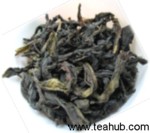
As the most famous one of all WuYi Rock Teas, Da Hong Pao is a no stranger to Oolong lovers. Many people have heard of the fantasy of the original Da Hong Pao tea trees growing on the Jiu Long (Nine Dragon) Cave. However, barely anybody have the opportunity to taste Da Hong Pao made of leaves from the original Da Hong Pao trees. So what are those available on the market now?
Mr. Chen Dehua is a name that associates with Da Hong Pao teas available on today’s market. Mr. Chen successfully cultivated modern Da Hong Pao trees from five cuttings from the original Da Hong Pao trees in 80s. He then went ahead test produced Da Hong Pao tea using leaves from cultivated Da Hong Pao trees. When he gave his new tea to famous tea expert, Mr. Zhang Tianfu, to taste, Mr. Zhang thought highly of this new product. WuYi Mountain Tea Research Institute hence produced their first Da Hong Pao tea under the supervision of Mr. Chen, who was head of the institute at that time.
Sales went through the roof and productions of those newly cultivated modern Da Hong Pao trees could not meet high demands for Da Hong Pao tea. Mr. Chen boldly drummed up another idea - why not create a Da Hong Pao alike tea by mixing up Da Hong Pao, and other WuYi Rock teas, such as Rou Gui, Shui Xian, etc.? - That becomes what is widely available as Da Hong Pao now.
Linda
www.teahub.com
Subscribe to:
Posts (Atom)